
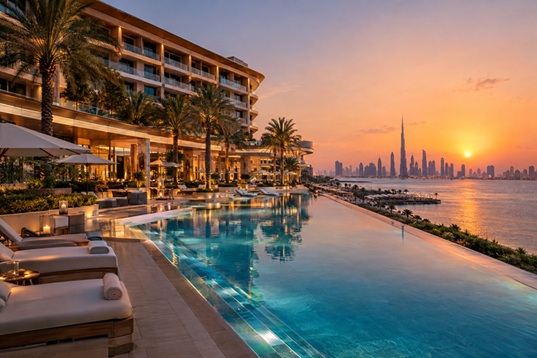
From ultra-luxury resorts in the Middle East to personalised urban retreats and exclusive wellness destinations, the world’s leading hotel brands are competing to deliver a new standard of hospitality.
By Emirates Magazine | Luxury & Hospitality | 2026
The global luxury hotel market is entering a new phase of transformation. In 2026, the world’s leading hospitality groups are investing in distinctive properties, personalised services and destination-led experiences to attract affluent travellers seeking more than traditional five-star accommodation.
Luxury hospitality remains an attractive segment for investors, despite growing competition, rising operating costs and questions about profitability. Deloitte’s 2025 European Hotel Industry and Investment Survey identifies luxury as the most attractive hotel segment for investment in 2026, highlighting the sector’s long-term appeal alongside the challenges facing operators.
A New Definition of Luxury Hospitality
For today’s premium travellers, luxury is increasingly defined by the quality of the overall experience. Spacious suites, exceptional restaurants, private pools and impressive architecture remain important, but personal attention and exclusivity are becoming equally significant.
Guests increasingly expect hotels to understand their preferences, from personalised wellness programmes and bespoke dining to private excursions and discreet concierge services.
For hotel operators, this creates an opportunity to differentiate their properties through service quality rather than relying exclusively on location, facilities or brand recognition.
The Middle East Strengthens Its Position
The Middle East continues to attract international hospitality investment, with the United Arab Emirates and Saudi Arabia playing particularly important roles in the development of luxury tourism.
Dubai has established itself as a global destination for premium hospitality, combining internationally recognised hotel brands, fine dining, high-end retail and distinctive leisure experiences. Its position as an international aviation hub also supports demand from European, Asian and other international markets.
Saudi Arabia is creating additional opportunities through its tourism development ambitions and expanding portfolio of hospitality projects. International operators are seeking to establish stronger positions in the Kingdom as new destinations and visitor experiences emerge.
In June 2026, IHG Hotels & Resorts announced plans to introduce all six of its Luxury & Lifestyle brands into Saudi Arabia by 2028, underlining the country’s strategic importance to international hotel groups.
This expansion reflects a broader shift towards destinations that combine luxury accommodation with cultural experiences, entertainment, wellness and access to distinctive landscapes.
International Hotel Groups Compete for Market Share
Competition among luxury hotel operators is intensifying as established brands expand their portfolios and new concepts enter the market.
Groups such as Marriott International, Hilton, Accor, IHG Hotels & Resorts and Hyatt are developing different approaches to premium hospitality, from internationally recognised luxury brands to lifestyle-focused properties and highly exclusive resorts.
Brand identity has become an important competitive advantage. Travellers may choose a hotel not only for its location, but also for its culinary offering, wellness facilities, design philosophy or reputation for personalised service.
At the same time, luxury hospitality is increasingly connected to other premium sectors, including fashion, gastronomy, residential real estate and private travel. These partnerships allow hotel brands to reach new audiences and create experiences that extend beyond the traditional hotel stay.
Wellness, Privacy and Bespoke Experiences
Wellness is becoming an increasingly important component of luxury hotel development. Dedicated spa facilities, personalised fitness programmes, restorative retreats and access to nature are helping properties appeal to travellers who value wellbeing alongside comfort.
Privacy is another major consideration. Villas, residences managed by luxury hotel brands, private entrances and discreet butler services offer guests greater control over their stay.
For families, business leaders and high-net-worth individuals, these features can be as important as traditional five-star amenities.
Hotels that combine exceptional accommodation with personalised activities, culinary experiences and local cultural discovery are well positioned to build stronger relationships with their guests.
Technology and the Human Touch
Digital innovation is changing how hotels manage operations and interact with customers. Artificial intelligence, guest data platforms and automated systems can help improve booking processes, anticipate preferences and streamline service delivery.
However, technology must support rather than replace the human element of luxury hospitality. The ability to respond quickly, anticipate individual needs and resolve problems discreetly remains central to a premium guest experience.
According to Deloitte’s 2026 hospitality analysis, changing customer behaviour and digital discovery are reshaping the competitive landscape. Hotels must therefore balance technological investment with meaningful, memorable interactions.
Operational efficiency is also becoming increasingly important as operators face pressure to protect margins while maintaining service standards.
Investment Opportunities and Future Challenges
The outlook for luxury hotels remains promising, but market conditions are not uniform. Established destinations may face stronger competition and pressure on profitability, while emerging markets offer opportunities for operators prepared to invest over the long term.
Investors are increasingly assessing location, brand strength, development costs, access to international visitors and the ability to generate demand throughout the year.
In the Middle East, the combination of tourism investment, international connectivity and new destination development continues to create opportunities for hotel owners, management companies, developers and hospitality brands.
Nevertheless, successful projects will require more than impressive architecture or ambitious positioning. Consistent service, clear market differentiation and sustainable operating models will remain essential.
The Future of Luxury Hotels
In 2026, the luxury hotel industry is competing on more than room categories and star ratings. The strongest brands are building complete hospitality experiences around privacy, personalisation, wellness, distinctive design and authentic connections with their destinations.
For the Middle East, the continued development of premium hospitality presents significant opportunities to strengthen its position in the global travel market.
As traveller expectations evolve, the hotels most likely to stand out will be those that combine international standards with a strong sense of place and genuinely individual service.
In the next chapter of luxury hospitality, excellence will not simply be measured by the facilities a hotel offers, but by how uniquely it makes each guest feel.


