
IAGTO European Convention 2026 in Málaga: The Business Engine Behind European Golf Tourism
Málaga became one of the world’s most important meeting points for golf tourism professionals in May 2026 when the International Association of Golf Tour Operators hosted its European Convention on the Costa del Sol.
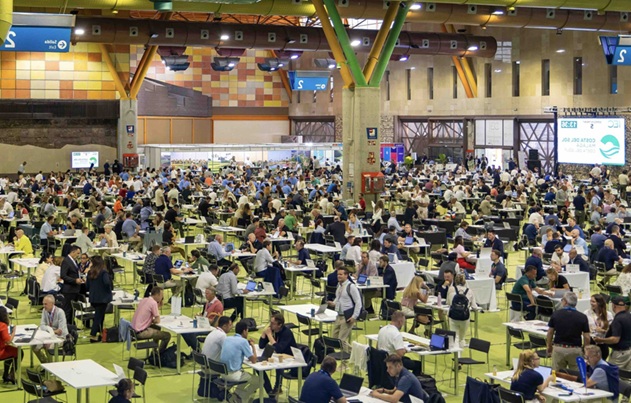
The fourth IAGTO European Convention held in Málaga brought together an unprecedented number of golf tourism professionals, highlighting the continued strength of the international golf travel market.
Held from May 20 to 21, 2026, the convention attracted 983 delegates from 54 countries. The event included 348 golf tour operator delegates from 42 countries and generated more than 11,000 pre-scheduled business meetings between golf tour operators and suppliers.
These numbers reveal something important about modern golf tourism.
Golf travel is not simply a leisure activity. It is a sophisticated international business ecosystem connecting tour operators, golf courses, resorts, hotels, destination management companies, tourism boards and other suppliers.
Málaga offered the perfect environment for these relationships to develop.
Why Málaga?
Andalucía has established itself as one of Europe’s most important golf tourism destinations.
The region combines a favourable climate, a long golf season, extensive hotel infrastructure, international air connectivity, gastronomy and cultural attractions.
The Costa del Sol is particularly well positioned.
Golfers can combine a round of golf with beach experiences, restaurants, cultural visits, luxury hotels and a wide variety of leisure activities.
This diversity has helped transform the region from a traditional sun-and-sea destination into a year-round tourism market.
The 2026 IAGTO convention provided an opportunity for the region to showcase this proposition directly to international travel buyers.
Business meetings at the centre
The defining feature of the IAGTO European Convention is its focus on business.
More than 11,000 pre-scheduled meetings took place during the two-day event. These meetings connected golf tour operators with resorts, golf courses, hotels, receptive operators and tourism boards from Europe, Africa and the Middle East.
This format is particularly effective because participants arrive with a clear commercial objective.
A tour operator may be looking for new golf destinations, hotel partners or courses to include in its programmes.
A golf resort may be looking for new distribution partners in Germany, the United Kingdom, Scandinavia or North America.
A tourism board may be looking to increase visitor numbers from specific markets.
The convention provides the environment for these conversations to happen efficiently.
The changing geography of golf tourism
Although Europe remains the centre of the event, the 2026 convention demonstrated that golf tourism is becoming increasingly global.
The UK represented 20% of buyer delegates, while Germany was another major market. Scandinavian buyers accounted for 14% of the total.
The event also welcomed 69 buyers from outside Europe, including a 150% increase in North American buyers and 20 delegates from Asia-Pacific markets.
This international diversification is strategically important.
Golf destinations increasingly need to understand different source markets.
An American golfer may have different expectations from a Scandinavian traveller.
A Middle Eastern luxury traveller may look for a different combination of hospitality and experiences from a British golf enthusiast.
Successful destinations therefore need flexible products and international distribution strategies.
The rise of the long-haul golfer
Long-haul golf tourism is becoming increasingly significant.
Travellers from North America and Asia-Pacific may be prepared to travel considerable distances for exceptional golf experiences.
This creates opportunities for European destinations.
Spain, Portugal, France, Greece and other Mediterranean markets can offer a combination of golf, climate, culture and hospitality that is difficult to replicate in more traditional golf destinations.
Recent industry reporting has also highlighted growing interest from North American golfers in mainland European destinations, supported by improved air connectivity, exchange rates and the appeal of year-round golf.
For destinations, this creates a major opportunity to position golf as part of a wider European luxury holiday.
Beyond the golf course
The modern golf traveller increasingly expects more than golf.
This is one of the most important structural changes taking place across the sector.
A golf holiday may include several rounds, but travellers are also interested in restaurants, wellness, wine, culture, beaches, shopping and other leisure activities.
For destinations such as Málaga and the Costa del Sol, this is a major advantage.
The region can offer golf alongside Mediterranean lifestyle experiences.
The golf course becomes one component of the overall destination proposition.
This is particularly important for couples and groups where not everyone plays golf.
A luxury resort that can satisfy golfers and non-golfers simultaneously becomes more commercially attractive.
Golf and economic development
Golf tourism also has an important economic dimension.
Tourism authorities increasingly view golf as a way to extend the traditional tourism season.
Unlike purely summer-oriented beach tourism, golf can attract visitors during spring, autumn and winter.
This creates opportunities for hotels, restaurants, transportation companies, golf facilities and local businesses throughout the year.
The Andalucía authorities highlighted this potential during the convention, noting the region’s more than 100 golf courses and more than 53,000 registered members.
For local governments, golf tourism therefore represents more than visitor numbers.
It can contribute to employment, business activity and destination diversification.
The importance of international partnerships
The IAGTO Convention also demonstrates why professional networks are so important.
A golf resort can have an exceptional course and a beautiful hotel, but without international distribution it may struggle to reach potential customers in distant markets.
Tour operators provide this distribution.
Tourism boards provide destination marketing.
Hotels and resorts provide the experience.
Together, these businesses create the international golf tourism product.
Trade events allow these different parts of the ecosystem to connect.
The social dimension
Professional golf tourism events are not exclusively about meetings.
The 2026 convention included a golf tournament involving more than 400 delegates across four regional courses.
Evening events included a welcome reception at Málaga Port and a farewell dinner and after-party at Sohrlin Andalucía.
These social elements are important because business relationships are often strengthened outside formal meetings.
Golf itself becomes a networking tool.
Professionals can experience courses together, discuss destinations informally and develop relationships that may later become commercial partnerships.
The next chapter for IAGTO
The continued expansion of the IAGTO European Convention demonstrates the strength of the golf tourism sector.
The 2026 edition was the largest IAGTO European Convention staged to date, with 983 delegates from 54 countries.
The organisation has already confirmed that the 2027 edition will move to Alicante, on Spain’s Costa Blanca, before returning to Málaga in 2028.
This rotation between major golf destinations is strategically valuable.
It allows buyers to discover different markets while giving host destinations an international platform to promote their golf infrastructure.
A mature international industry
The IAGTO European Convention illustrates the maturity of the modern golf travel industry.
The sector is no longer built simply around golf courses and hotel rooms.
It is an international B2B network involving travel distribution, destination marketing, luxury hospitality, technology, aviation and tourism.
Málaga’s success in 2026 demonstrates the commercial power of bringing these stakeholders together.
With nearly 1,000 delegates, more than 11,000 business meetings and representation from 54 countries, the convention showed that international demand for golf travel remains strong.
For European destinations, the message is clear.
Golf tourism is an increasingly valuable part of the international travel economy, and the destinations that succeed will be those capable of combining excellent golf with strong hospitality, accessibility, experiences and professional international distribution.


